 WaywardHouse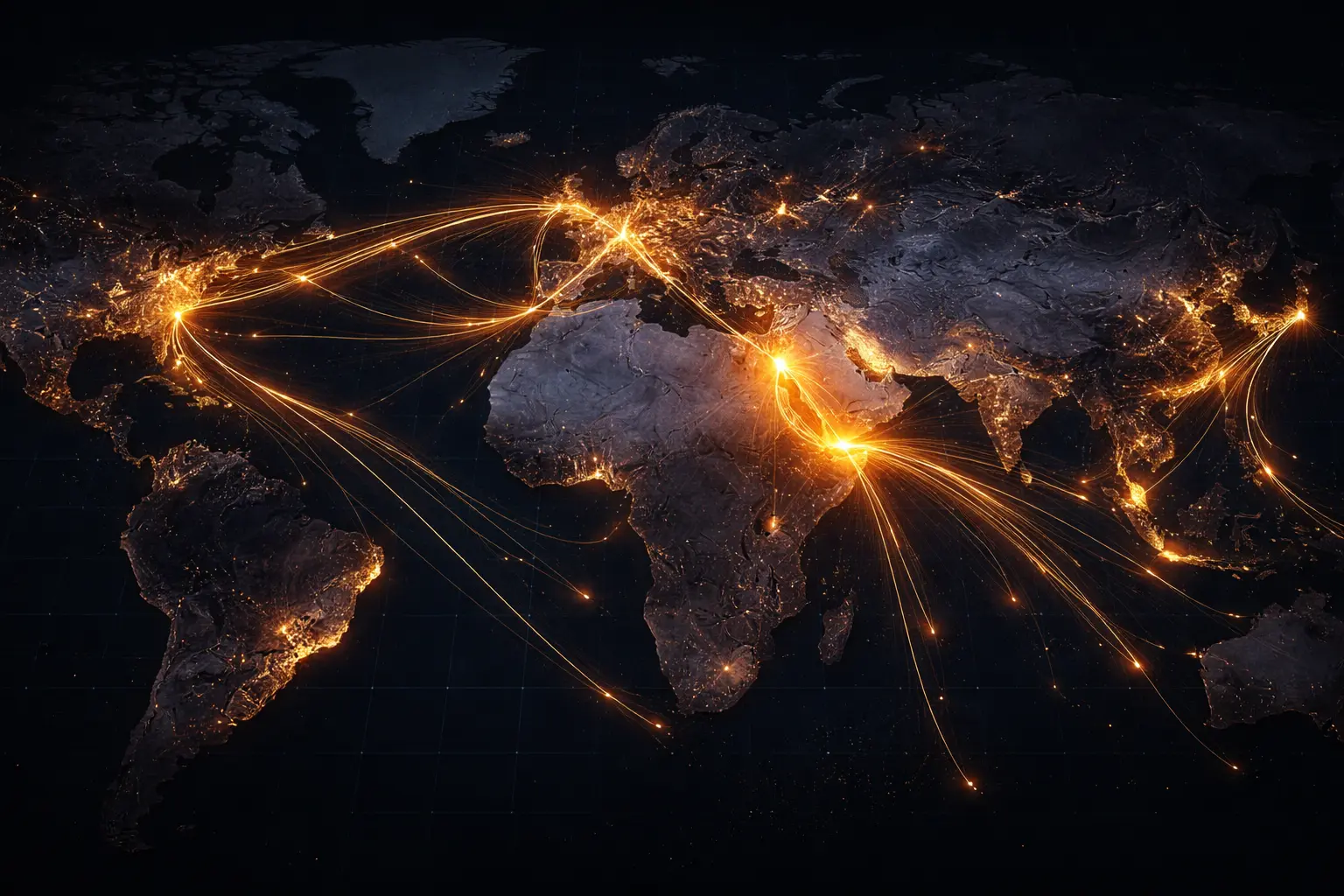
After the Burning Strait
The March 3 shock has matured into something more structurally revealing: not a simple blockade, but a rationed, politicised passage regime shaped by reserves, selective transit, and importer-side intervention.
Published March 27, 2026. This essay extends The Burning Strait from the vantage of four weeks later. The original piece analysed the activation of the chokepoint. What follows asks a different question: what kind of system emerges when the chokepoint does not reopen, but neither remains absolutely sealed?
Preface: The Shock Has Become a Regime
On March 3, the central analytical fact was interruption. Tanker traffic had collapsed. Insurance was withdrawing. Prices were repricing a risk long treated as hypothetical. The language of the moment was the language of rupture.
By March 27, that is no longer sufficient.
The Strait of Hormuz is still not operating as a normal commercial waterway. But neither is it best described simply as “closed.” A different condition has emerged: selective passage, political clearance, emergency reserve release, importer-side price controls, fuel rationing, and a gradually improvised security architecture around a corridor that no longer functions as a neutral artery of trade.1
That distinction matters. A closure is an event. A governed corridor is a regime. Events shock markets; regimes reorder them.
There is also a direct continuity here with The Ideology of Extraction. That essay argued that commodity systems do not run on force alone; they also run on distance, narrative, and the management of who is allowed to see costs clearly.2 The late-March Hormuz regime makes that pattern legible in real time. The corridor is being governed physically, but also rhetorically: in the language of safe passage, hostile vessels, emergency stabilisation, and energy security. The commodity remains oil. The justificatory vocabulary mutates around it.
Part A: From Shipping Lane to Political Checkpoint
One month into the crisis, the geography has changed less than the governance has. The water is the same water. The narrowness is the same narrowness. What has changed is the rule set imposed upon movement through it.
The most revealing current-affairs detail of the past week is not a price print. It is the emergence of what shipping analysts have begun calling “Tehran’s tollbooth”: a northerly passage in Iranian territorial waters, close to Larak Island, through which a small number of vessels have been visually verified and selectively permitted to proceed.3
That is a very different condition from the one described in the original essay. In early March, the strait was closed by fear and by market withdrawal. In late March, it is being partially reopened on explicitly political terms.
The systems implication is easy to miss if one focuses only on whether ships are moving. Some are. But movement now depends on political classification: hostile versus non-hostile, permitted versus non-permitted, inspected versus uninspected. The strait has ceased to be an open corridor governed primarily by commercial convention and maritime insurance. It is becoming a discretionary checkpoint.
That means the bottleneck is no longer only physical. It is administrative, coercive, and selective. The constraint has moved from width alone to decision.
Part B: The State Re-enters the Market
If March 3 was the moment the market withdrew, March 11 was the moment the state re-entered.
The International Energy Agency announced the largest emergency stock release in its history: 400 million barrels from member-country reserves.4 Four days later, the agency reported that Asia-Oceania members would begin releasing stocks immediately, while the Americas and Europe would begin later in March.5
That sequencing is more than administrative detail. It is a map of exposure. The barrels move first toward the places that are geographically and commercially closest to the shock.
Reserves, however, do not solve the underlying geographic problem. They buy time; they do not recreate throughput. The IEA’s March Oil Market Report is explicit on this point: the stock release is a “significant and welcome buffer,” but only a stop-gap so long as regular transit through Hormuz does not resume.6
This is the essential difference between a stock problem and a corridor problem. Stocks can cover temporary absence. They cannot permanently replace a trade route that normally carries roughly 20 million barrels per day and a very large share of global LNG.46
Part C: Asia Stops Pretending This Is External
One of the arguments in the original essay was that the blast radius of Hormuz was always more Asian than Atlantic. That claim now has harder proof.
South Korea has moved beyond monitoring and into overt domestic intervention. Reuters reported on March 12 that Seoul imposed a fuel-price cap, set the maximum wholesale gasoline price at 1,724 won per litre, and required refiners to release at least 90% of the petroleum-product volumes they had released in the same months a year earlier.7 This is not a market awaiting balance. It is a government suppressing transmission.
Japan’s response has been different in form but similar in meaning. Reuters reported on March 14 that JERA, Japan’s largest LNG buyer, had begun talks for additional purchases with global suppliers as it hedged against worsening Middle East disruption.8 The same report noted that about 20% of global LNG supply was offline and that a return to normal deliveries could take months.8
The point is not that Asia is panicking. The point is that Asia is governing scarcity.
And this has now propagated beyond the major importers. Reuters reported on March 4 that Myanmar introduced a sweeping fuel-rationing system for private vehicles, using an even-odd licence-plate rule, explicitly blaming Middle East shipping disruption and obstructed oil flows.9 That is the systems view made visible at street level: a decision taken in a narrow channel between Iran and Oman ends as alternating driving days in Yangon.
This figure is interpretive rather than purely statistical. That matters. It is not measuring one variable. It is visualising the form of state response. The broader inference is that importer-side policy is beginning to stratify by wealth, reserve depth, and institutional capacity. Rich importers cap prices and secure substitute cargoes. Poorer or more fragile importers ration demand directly.
Part D: The Price Was Never the Whole Story
It is tempting to reduce the past month to a price chart. Certainly the oil market has supplied enough spectacle for that temptation: Brent moved from roughly $72.5 per barrel on February 27 to around $84 at the original publication date, spiked to an intraday peak of $126 on March 8, and was still trading above $100 in mid-March.10
But the more durable change is not the spike. It is the normalisation of frictions around the spike.
The IEA’s March report described crude and product flows through the strait as having fallen from around 20 mb/d “to a trickle currently,” with Gulf producers cutting output by at least 10 mb/d and more than 3 mb/d of refining capacity already shut.6 Those are not merely price-moving facts. They are evidence that the shock has become infrastructural.
When the system is this constrained, price ceases to be the only adjustment mechanism. Politics, rationing, sequencing, and physical queueing all begin to do the work that price alone cannot. That is what the anchored vessels, stranded crews, emergency stock draws, and selective-transit corridor have in common: they are all signs that allocation has partially left the market.
In this sense, the current phase of the crisis looks less like a classic commodity spike than like the emergence of a wartime logistics regime.
This is also where the correlation with the March 12 essay becomes strongest. In historical terms, what we are watching is not simply a supply interruption. It is the old extractive pattern under contemporary conditions of collapsed distance. The costs are visible almost instantly, the ideological framing is deployed almost instantly, and the distributional asymmetry remains familiar: strategic actors negotiate corridor access, while downstream households experience the crisis as inflation, scarcity, or rationing.2
Part E: What This Changes for the Original Framework
The original essay argued that duration was the critical variable. That remains true, but the meaning of duration has changed.
In the first week, duration meant: how long until traffic resumes?
By late March, duration means something harder: how long can the world operate with Hormuz functioning as a filtered corridor rather than an open one? How long can strategic stocks absorb missing barrels? How long can Asian governments subsidise, cap, or ration fuel before fiscal and political stress becomes the larger story?
The change is subtle but important. We are no longer asking only when the emergency ends. We are asking what secondary institutions appear while the emergency persists.
The Alberta retail market offers a useful local proof of this. If local refining capacity were enough to insulate consumers from a Gulf-centred supply-chain shock, one would expect a weaker response at the forecourt in Calgary and Edmonton than in more import-dependent jurisdictions. That is not what happened. Statistics Canada-linked monthly series put January 2026 regular gasoline at 121.6 c/L in Calgary and 118.9 c/L in Edmonton.1112 By March 27, 2026, Gas Wizard was reporting current average prices of 172.2 c/L in Calgary and 171.9 c/L in Edmonton.1314 That is an increase of roughly 50–53 cents per litre in less than three months.
The point is not that Alberta lacks refineries. It is that refining does not sever the province from the wider pricing system. Alberta motorists still buy fuel priced off replacement cost, wholesale rack signals, and a continental product market that reacts to crude risk, refinery outages, insurance costs, and expected scarcity. In other words: the forecourt can be local while the price formation remains global. When the system tightens, the rocket still reaches Calgary. When relief comes, the feather still takes its time. That is precisely the mechanism described in Rockets and Feathers: the local pump remains downstream from the same logistical and financial system, even when the refinery is in-province.15
For Alberta, the directional implication remains the one sketched in both Contested Ground and The Burning Strait: Pacific-facing export optionality rises in value when Gulf-to-Asia routes degrade. But this second essay adds a caution. The gain is not simply a matter of higher headline oil prices. It depends on whether disrupted Asian importers are confronting a short-lived price event or a prolonged logistics regime in which every reliable non-Hormuz barrel acquires premium strategic value.
That is a stronger claim than “oil is up.” It is a claim about route quality.
Conclusion: Geography Has Become Procedure
The world spent decades treating the Strait of Hormuz as a narrow piece of geography. That was always incomplete. A chokepoint is never just space; it is space plus rule.
What the month since March 3 has shown is that when the rules change, the geography changes with them. A lane becomes a checkpoint. Insurance becomes diplomacy. Strategic reserves become time-buying devices. Domestic fuel policy in Seoul, procurement strategy in Tokyo, and rationing in Myanmar all become downstream expressions of a single altered corridor.
The lesson is not only that the strait is important. We knew that already. The lesson is that infrastructure crises do not stay infrastructural for long. They become constitutional questions for trade: who may pass, on what terms, under whose protection, and at whose cost.
That is the deeper update to the original essay. The Burning Strait described the shock of activation. This phase is about governance after activation. The system has not healed. It has learned a harsher way to keep moving.
Notes and References
-
See the original essay, The Burning Strait, published March 3, 2026 and updated March 9, 2026. ↩
-
See The Ideology of Extraction, March 12, 2026, especially the sections on “the geometry of distance” and “the collapse of distance.” The interpretive link made here is mine: the contemporary Hormuz crisis can be read as a live case of the same structure, now compressed into a real-time media and financial environment. ↩ ↩2
-
Joanna Partridge, “‘Tehran’s tollbooth’: a visual guide to how a trickle of ships still passes through strait of Hormuz,” The Guardian, March 26, 2026. Used here for current shipping conditions, estimated transits, stranded crews, and the emergence of the Iranian-controlled northern corridor. ↩
-
International Energy Agency, “IEA Member countries to carry out largest ever oil stock release amid market disruptions from Middle East conflict,” March 11, 2026. ↩ ↩2
-
International Energy Agency, “Update on IEA collective action decision of 11 March 2026,” March 15, 2026. ↩
-
International Energy Agency, “Oil Market Report - March 2026,” published March 12, 2026. ↩ ↩2 ↩3
-
Reuters, “South Korea to cap fuel price starting Friday to ease consumer burden,” March 12, 2026. ↩
-
Reuters, “Japan’s JERA hedges growing Middle East risks by seeking more LNG supply,” March 14, 2026. ↩ ↩2
-
Reuters, “Myanmar junta to ration fuel for private vehicles, blaming Middle East shipping disruptions,” March 4, 2026. ↩
-
Price points here combine Reuters reporting on February 27 and mid-March closes with the March 9 update appended to The Burning Strait. The March 8 figure refers to the intraday Brent peak noted in that update. Because late-March prices remain volatile day to day, the argument here is framed around regime change rather than any single closing print. ↩
-
YCharts, “Calgary, AB Average Retail Price for Regular Unleaded Gasoline at Self Service Filling Stations,” sourced from Statistics Canada. The latest value shown in search results is 1.216 CAD/L for January 2026. ↩
-
YCharts, “Edmonton, AB Average Retail Price for Regular Unleaded Gasoline at Self Service Filling Stations,” sourced from Statistics Canada. The latest value shown in search results is 1.189 CAD/L for January 2026. ↩
-
Gas Wizard, “Calgary gas prices,” opened March 27, 2026. The page reported a current average price of $1.722/L on Friday, March 27, 2026. ↩
-
Gas Wizard, “Edmonton gas prices,” opened March 27, 2026. The page reported a current average price of $1.719/L on Friday, March 27, 2026. ↩
-
See Rockets and Feathers, especially the sections on replacement-cost pricing, rack-price signalling, and Alberta’s concentrated wholesale tier. The connection drawn here is that March 2026 has supplied a fresh live case of the same mechanism. ↩